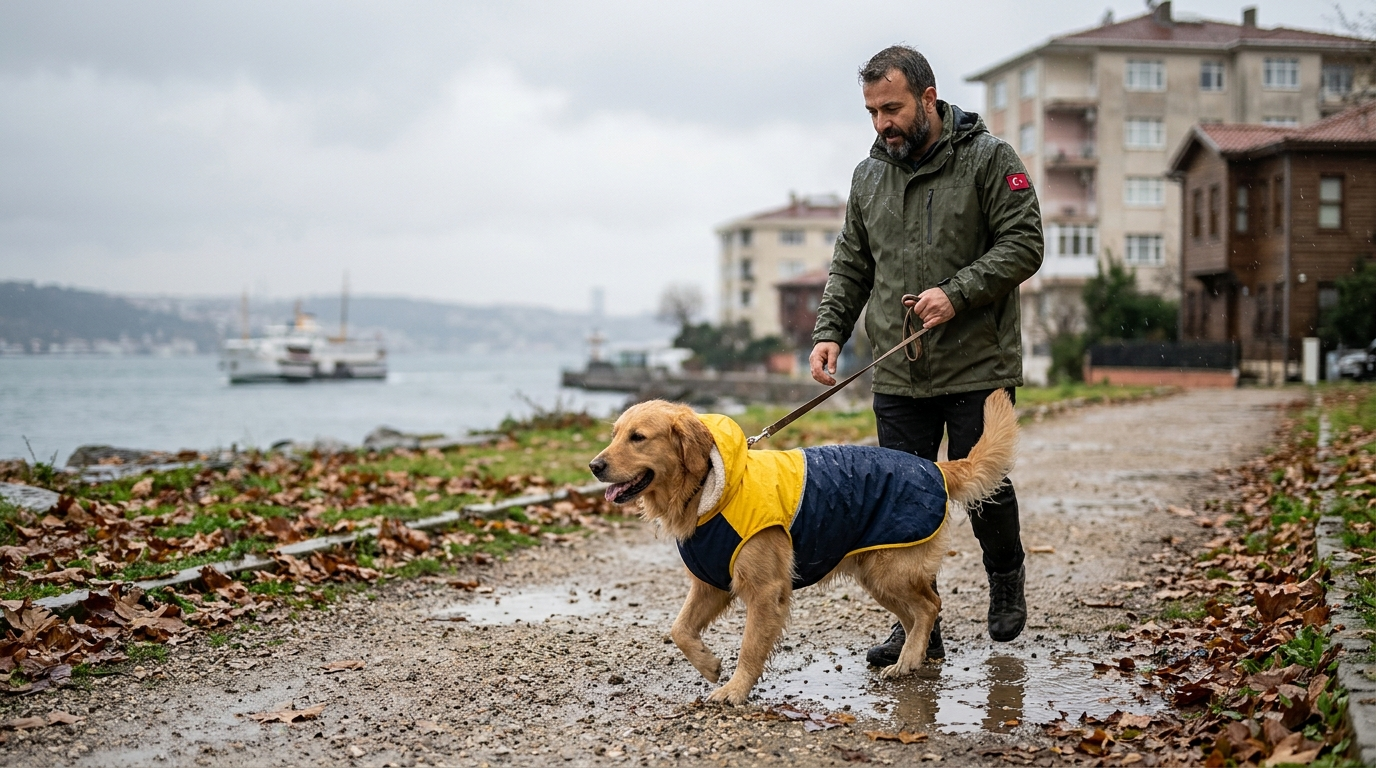
How to choose a dog raincoat can make wet-weather walks more comfortable by keeping your dog’s back, chest, and coat drier without restricting movement. The best choice depends on your dog’s body shape, the amount of rain, walk length, and how easily your dog tolerates clothing. Look for practical coverage, a secure but comfortable fit, simple closures, and visible details rather than choosing by appearance alone.
Start with the coverage your dog actually needs
Raincoats vary from lightweight back coverings to full-body designs. A simple shell may be enough for a dog with a short coat that gets wet mainly along the back. Dogs with low bellies, long hair, or little body insulation may benefit from a longer design that protects the chest and underside.
Coverage should protect without interfering with toileting. Check that the coat leaves enough space around the belly and rear legs. A garment that extends too far underneath can become wet or dirty quickly and may make your dog reluctant to walk.
For short trips in light rain, a compact shell is often easier to put on and less bothersome. Longer walks or heavy rain call for more coverage, but extra fabric also adds weight and can trap heat. Match the coat to the conditions instead of assuming the most coverage is always the best option.
How to measure for a dog raincoat
Use a soft measuring tape and measure your dog while standing naturally. The most useful measurements are back length, chest girth, and neck circumference.
- Back length: Measure from the base of the neck, where the collar normally rests, to the base of the tail.
- Chest girth: Measure around the widest part of the rib cage, usually just behind the front legs.
- Neck circumference: Measure around the lower neck without pulling the tape tightly.
Compare these measurements with the manufacturer’s chart instead of relying on small, medium, or large labels. If your dog falls between sizes, the chest measurement and adjustment range usually matter more than the back length alone. A coat that is slightly roomy can often be adjusted, while one that is tight across the chest may limit breathing and shoulder movement.
Check movement before choosing a dog raincoat
Your dog should be able to walk, sit, turn, sniff, and relieve itself normally. Lift each front leg gently while the coat is on and check whether the fabric pulls across the shoulders. Watch for rubbing behind the front legs, tightness around the neck, or material that shifts toward the side.
Dogs with deep chests, broad shoulders, short backs, or long bodies may not fit standard shapes well. Adjustable side straps and multiple fastening points can improve the fit, but they cannot correct a fundamentally unsuitable cut. If the coat bunches behind the neck or leaves most of the back exposed, try a different shape rather than tightening every strap.
Compare closures, fabric, and comfort features
Closures affect how quickly you can prepare for a walk and how securely the coat stays in place. Hook-and-loop fasteners are easy to adjust, while zippers can create a closer seal but may catch fur if poorly designed. Buckles are secure but can be slower when your dog is waiting impatiently by the door.
A useful dog raincoat should close firmly without pressing into the throat or rubbing the skin. Look for smooth interior seams, covered fasteners, and enough adjustment to fit over your dog’s usual collar or harness. If you walk with a harness, confirm that the coat includes a usable access opening or enough room to avoid putting pressure on the harness straps.
Water-resistant fabric may handle light showers, but it is not always fully waterproof. For frequent heavy rain, look for sealed or covered seams and a fabric description that explains its intended weather protection. A breathable lining can help during active walks, especially for thick-coated dogs, but no coat should be left on a dog indoors for long periods.
Choose visibility for dark and rainy conditions
Rain often arrives with poor light, and wet streets can make dogs harder for drivers, cyclists, and other walkers to see. Reflective strips or high-contrast panels are useful additions, particularly if you walk early in the morning or after sunset.
Visibility details should complement, not replace, a leash, identification tag, and responsible handling. Bright colors are easier to notice during the day, while reflective elements work best when illuminated by headlights. Check that reflective trim remains visible from the side as well as from behind.
Help your dog accept the coat
Do not wait for a storm to introduce a new dog raincoat. Let your dog investigate it indoors, then reward calm behavior while touching the coat to the shoulders and back. Put it on for a few seconds, remove it, and gradually increase the time.
Once your dog walks comfortably indoors, try a brief outdoor trip in mild weather. Watch body language: freezing, repeated scratching, tucked posture, or attempts to escape suggest that the fit or introduction needs attention. Never force a dog into clothing that causes clear distress. Some dogs need a different design, while others may tolerate a coat only for essential short walks.
A practical pre-purchase checklist
- Measure the neck, chest, and back before shopping.
- Choose coverage based on coat type, body shape, and usual weather.
- Confirm that the cut allows free shoulder and leg movement.
- Check whether the coat works with your dog’s collar or harness.
- Look for secure closures and smooth edges that will not rub.
- Prefer breathable, water-resistant materials for regular use.
- Add reflective details if you walk in low light.
- Choose a design that can be cleaned and dried easily.
The right dog raincoat should disappear into the walk: your dog can move naturally, stay reasonably dry, and remain comfortable from the first step to the last. Prioritize measurements and movement over color or extra features, then introduce the coat gradually so rainy-day gear becomes routine rather than a source of stress.
Example product for a raincot for your dog –> https://amzn.to/4Bq4INE
You can also check our other article about puzzle toy Choose the Right Puzzle Toy for Your Dog’s Skill Level